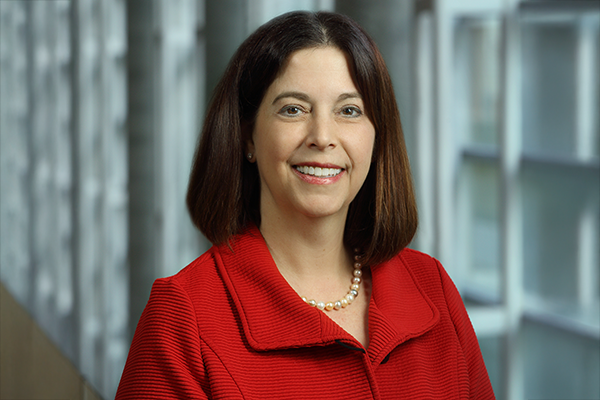
By Rekha Radhakrishnan
Being an early-career research scientist can be an exciting, yet anxious, time; the shape of your career can feel elusive, but the process of discovery can be a galvanizing force that propels your interests. Dr. Wendy Post, the Lou and Nancy Grasmick Professor of Cardiology in the Johns Hopkins School of Medicine, and Professor of Epidemiology at the Bloomberg School of Public Health, is the dual principal investigator of the Division of Cardiology's National Heart, Lung, and Blood Institute (NHLBI) post-doctoral training grant, a federal award that Johns Hopkins University has stewarded for 51 years, focused on training the next generation of PhD and physician-scientists in cardiology research. Dr. Post is very familiar with the feeling from early in her own career and from the many early career researchers that she has worked with, preparing them for the rigorous work of developing exciting questions that motivate them, conducting research, analyzing and interpreting data, and ultimately, helping to shape the field for the future.
“We want trainees to be infected with the research bug, and we want to see them grow as people and scientists, and some as physicians. Mentorship is incredibly gratifying because we get to observe that process unfolding with new generations of scientists, and we know how much society will benefit from their discoveries,” said Dr. Post.
Administering the NHLBI grant entails bringing together 12 postdoctoral fellows working across a broad range of projects from cardiovascular bench science to clinical trials to population health, over a two- to three-year period of mentored research support. “They are connected to a primary mentor who works with them directly and helps them through every stage of their research," she said. "It is important for them to know they have support when challenges come up, and they inevitably will.”
Early in her medical career, during an epidemiology fellowship, Dr. Post worked at the Framingham Heart Study, an observational cohort study of men and women living in the town of Framingham, a suburb just 30 minutes southwest of Boston, where she studied risk factors for cardiovascular disease and started to learn more about the genetic factors influencing it. This interest in population-level health impact drove her to earn a Master of Science in Epidemiology at Harvard University and shaped her long-term research interests in prevention and genetic influences on heart disease. “When I became a doctor, it was clear that it made more sense to prevent cardiovascular disease rather than wait until patients had a heart attack, heart failure, or stroke," she said. "Focusing on prevention, you can impact a much larger proportion of the population.”
Early in her career at Johns Hopkins University, Dr. Post was part of a Hopkins research team that was chosen as one of six national field centers for The Multi-Ethnic Study of Atherosclerosis (MESA) that follows a racially diverse cohort in Baltimore for over 25 years, collecting detailed measures of their risk for cardiovascular disease. Over the course of the NHLBI study and her career, Dr. Post became the principal investigator of the Hopkins field center and, more recently, the chair of the MESA steering committee. She mentors others to use the wealth of data collected over the years to produce original research manuscripts that have contributed to the practice of cardiology.
As medicine evolves toward a more personalized approach that considers genetic variants and how they interact with environmental factors and social determinants, MESA and their concomitant data gathering will fuel the technology that parses, analyzes, and ultimately contributes to individualized, preventive cardiology care. And all this with a new generation of research scientists who will pioneer ideas about cardiology that were nascent when they were early career research fellows.
